
What hurts a home appraisal in California most often is deferred maintenance and visible damage, weak or missing comparable sales, outdated kitchens and bathrooms, poor curb appeal, unpermitted additions, and location factors the owner can’t change. Most of these come down to condition or comparables, so a seller can repair or document them before the appraisal, or sell directly for cash, which can close in as few as 7 days.
lightbulbKey Takeaways
An appraiser must report deferred maintenance and damage, so a worn roof, water stains, or foundation cracks will show up in the value, and serious defects can leave the home appraised subject to repairs.
check_circle
Under Fannie Mae’s June 2025 Selling Guide, an appraisal needs at least three closed comparable sales, and sales from the last 12 months are the usual starting point, so thin or dated comps can pull down an otherwise sound home.
check_circle
Unpermitted additions can complicate both the appraisal and the sale, and California sellers must disclose known unpermitted work even when the home sells as-is.
check_circle
Busy roads, nearby commercial uses, and other location factors can’t be repaired, so they have to be priced in.
check_circle
Photos, receipts, and permits for past repairs give you evidence if you later ask your lender to reconsider the value.
check_circle
A buyer paying cash has no lender, so no lender orders an appraisal.
A home appraisal can make or break your real estate transaction. Whether you’re selling a California property or refinancing a mortgage, the appraiser’s opinion sets how much your home is worth on paper, and the lender sizes its loan around that number.
Knowing what hurts a home appraisal in California gives you a chance to fix problems before the visit, not after a low figure arrives. The causes fall into two groups. Condition covers the roof, foundation, kitchens, curb appeal, and any work done without a permit. Comparables cover what similar homes nearby have sold for, and Fannie Mae’s guidance points appraisers to sales from the last 12 months. A few causes, like a busy street, can’t be changed at all.
The 10 issues below start with condition, move to comparables and outside factors, and end with a table you can use as a checklist.
Condition problems, meaning deferred maintenance, damage, and outdated systems, are among the biggest appraisal-lowering factors in California, because they’re the problems an appraiser can see and has to report.
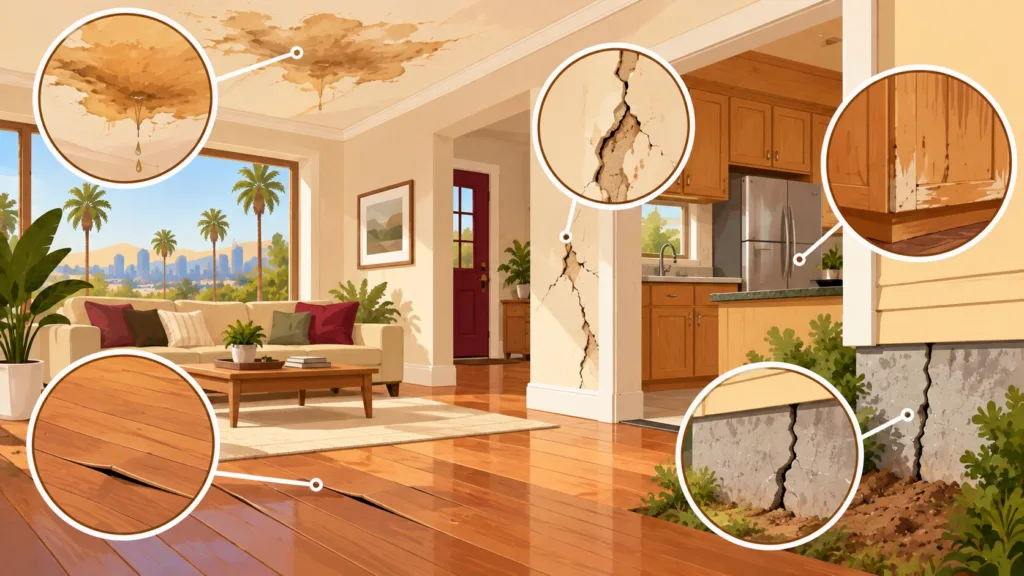
A roof in poor condition raises immediate red flags. Missing shingles, visible sagging, or water stains on ceilings suggest leaks that could lead to more serious structural damage. Cracks in walls, uneven floors, or doors that won’t close properly can point to foundation problems, among the most serious defects an appraiser will note.
Pests and moisture work the same way. Evidence of termites or rodents, musty odors, or warped flooring suggests damage you can’t see. Fannie Mae’s guide asks the appraiser to comment on infestation, dampness, or settlement, and the lender has to show the problem was corrected or cleared by a professional report. When a defect affects safety or soundness, the home can be appraised subject to repairs.
Fix visible issues that suggest the home hasn’t been cared for, and have a licensed professional look at any roof, foundation, pest, or moisture concern. Keep the reports and receipts.
Old appliances, laminate countertops, worn cabinets, and dated bathroom fixtures make a home feel stuck in the past. Appraisers compare these rooms with the condition of nearby homes that have sold, so a dated kitchen can leave a home looking weaker on paper.
Visible plumbing problems like leaky faucets or running toilets suggest deeper issues that could affect the home’s livability. Under the same guidance, minor wear of this kind doesn’t need an immediate repair, but the appraiser still has to report it. Small updates, such as paint, fixtures, and hardware, go a long way.
Neglected landscaping, exterior paint problems, cracked driveways, and damaged structures all contribute to a lower appraised value.
These visible issues look unsightly, and they suggest ongoing maintenance problems throughout the property. Tidy up the exterior with these 10 curb appeal tricks before the appraiser arrives.
Unfinished spaces, such as a half-completed remodel or a basement with exposed framing, can read as missed potential, and incomplete projects may suggest the owner ran short of money or planning.
Unused or poorly maintained areas like sunrooms or bonus spaces that serve no clear purpose also hurt, since appraisers favor functional, practical space. Finish key spaces or clean up neglected areas before the appraisal.
Layouts that were acceptable decades ago can feel awkward now. Homes with too few bathrooms for the number of bedrooms, isolated kitchens, or bedrooms without closets face real appraisal challenges.
Appraisers are told to address functional inadequacies like these in their comments. They’re also often expensive or impossible to remedy, so small renovations like opening a wall or adding closet space are the realistic options.
Poor comparables, unpermitted work, over-customization, and location factors can lower an appraisal regardless of condition, because each changes how the home stacks up against what has sold nearby.

Additions or renovations completed without proper permits are a major red flag for appraisers. Appraisers and lenders can treat floor area that doesn’t appear in public records with caution, so unpermitted square footage may not count toward the home’s size.
DIY renovations that don’t meet professional standards hurt value too. Uneven tile work, improperly installed flooring, or amateur electrical work all signal potential safety concerns and future expenses.
California sellers must also disclose unpermitted work they know about, even when the home sells as-is, so the problem follows the property either way.
Investing more in a home than the neighborhood supports can hurt an appraisal. Fannie Mae’s guide requires adjustments to reflect the market’s reaction, and when adjustments grow large enough to suggest a home doesn’t fit its neighborhood, the underwriter has to decide whether the value is supported.
A luxury chef’s kitchen on a street of modest homes may not return what it cost, and highly personal design choices or specialized features can narrow the pool of buyers who find the home appealing. Align upgrades with local expectations.
While you can’t change your home’s location, appraisers weigh neighborhood factors in their valuations. Homes on busy streets, near highways, or next to commercial areas can appraise lower because of noise and privacy concerns, and nearby foreclosures or vacant homes can have a similar effect. Boost the interior value and curb appeal to help offset them.
Your home’s value is tied to recent comparable sales in your area, whatever the property’s condition or features. Fannie Mae’s guide calls for at least three closed comparable sales, and sales from the last 12 months are the usual choice, though older sales can be used when recent ones are scarce if the appraiser explains why.
Pulling your own list of recent sales gives you a feel for the fair market value of your home before the appraiser does, and the county’s assessed value is a separate figure, as assessed vs market value explains. Know your comps and timing, and consider delaying a sale in a weak market if possible.
A refinance appraisal helps the lender set the terms of the new loan, so a value that comes in low can change what you’re offered. Keep updated records of repairs and upgrades, such as dates, photos, and receipts, to show the appraiser what you’ve added.
Here are the 10 issues that hurt a California appraisal, their impact, and what you can do.
| Issue | Why it hurts value | What you can do |
| 1. Damage and deferred maintenance | The appraiser must report it, and serious defects can leave the home appraised subject to repairs | Have roof, foundation, pest, and moisture concerns checked and fixed, and keep the paperwork |
| 2. Outdated kitchens and bathrooms | The rooms compare poorly with updated homes that sold nearby | Start with paint, fixtures, and hardware |
| 3. Poor curb appeal | Neglect outside suggests neglect throughout | Tidy the landscaping, repaint trim, and repair cracks |
| 4. Unfinished or neglected spaces | Incomplete projects and clutter hide a room’s real condition | Finish key spaces and clear storage areas |
| 5. Awkward floor plans | Functional problems are often costly to fix | Make small changes, such as adding closet space or opening a wall |
| 6. Unpermitted work and DIY renovations | Floor area missing from public records can be treated with caution, and known work must be disclosed | Ask the building department about legalizing it and talk with an attorney |
| 7. Over-upgrading | High-end features may not be matched by nearby sales | Keep upgrades in line with nearby homes |
| 8. Location factors | Noise, traffic, and nearby commercial uses show up in the comparison | Strengthen the interior and curb appeal to offset them |
| 9. Weak market comps | Low recent sales nearby set the value | Study recent sales and consider timing |
| 10. Refinance-specific issues | The appraisal helps set the terms of the new loan | Keep dated records of repairs and upgrades |
Osborne Homes is a California real estate investment company that has bought houses directly for cash, as-is, since 2007, so a seller with a long repair list can sell a house that needs work without ordering repairs or waiting on a buyer’s lender.
Major structural issues like foundation problems, roof damage, and outdated electrical systems generally hurt California appraisals most significantly. The appraiser has to describe defects that affect safety or soundness, and the home may be appraised subject to repairs. Weak comparable sales can pull down a home in good shape just as hard.
They can. Appraisers and lenders may treat floor area that isn’t in public records with caution, so the extra space may not count the way the owner expects. California sellers must also disclose unpermitted work they know about, even in an as-is sale. A local building department can say whether the work can be legalized, and a California real estate attorney can advise on disclosure.
Yes, you can ask your lender for a reconsideration of value. Federal agencies issued guidance on the process in July 2024. Ask the lender what it needs, then send errors in the report, recent nearby sales the appraiser may have missed, and photos or receipts. The lender decides whether to go back to the appraiser, and a review doesn’t guarantee a higher figure.
Clutter alone usually doesn’t lower the value, but it can get in the way of an accurate one. Heavy clutter can hide damage or keep an appraiser from seeing a room’s condition, and grime, odors, or stained surfaces can point to deferred maintenance, which the appraiser has to report even when it’s minor. A cleanup before the visit costs little.
You avoid a lender appraisal by selling to a buyer who pays cash, because lenders order appraisals and a cash buyer has no lender. If your buyer is financing, the appraisal comes with the loan, so the best preparation is repairing visible damage and having permits and receipts ready.
Condition is the one factor fully in your hands, so repair what an appraiser can see before the visit and keep the receipts. If the home needs more work than you want to take on, Osborne Homes makes no-obligation cash offers and can close in as few as 7 days, with no lender appraisal to wait for.

The Osborne Homes Team
The Osborne Homes team specializes in California real estate, helping buyers, sellers, and homeowners navigate the market with clarity and confidence. Our articles are written to provide practical guidance, local insight, and up-to-date information you can trust.


Get a no-obligation cash offer in as little as 48 hours. No repairs, no agents, no stress. Just a dignified way to move forward.
Free property assessment. No obligation. No pressure.
sell