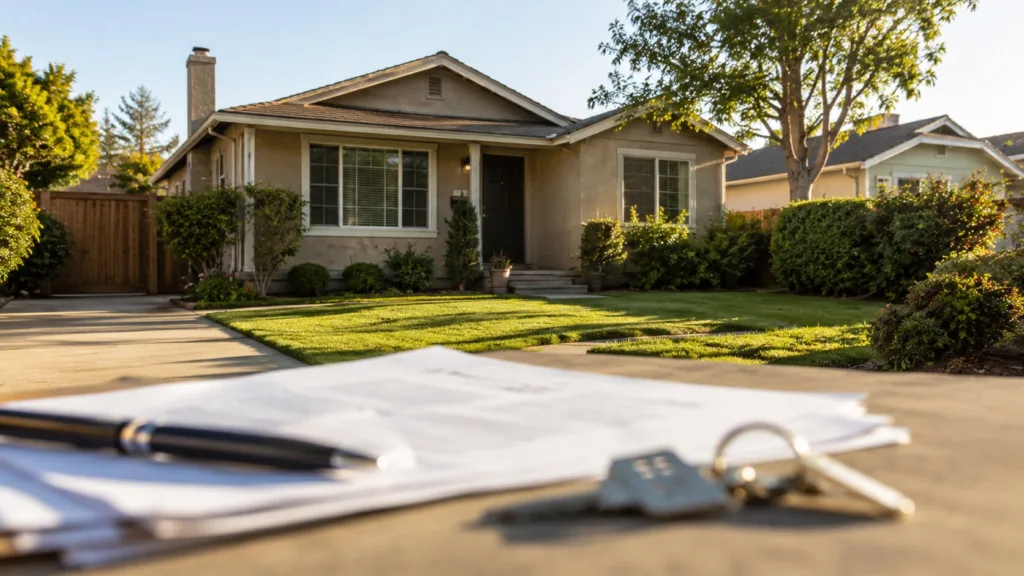
In most cases, a California house cannot be sold before probate is granted. The court needs to appoint an executor and confirm their legal authority to sell before a transaction can close. There are two exceptions worth knowing about: property held in a living trust, which skips probate entirely, and certain primary residences that may qualify for a simplified court procedure instead of full probate.
If you’ve inherited a home and you’re wondering how fast you can actually get it on the market, the real question is: can you sell a house before probate is granted at all, and if so, how? The answer depends almost entirely on which of these two situations applies to you. Let’s go through them.
lightbulbKey Takeaways
check_circle
In most cases, no. A California house can’t be sold before probate is granted. The court must first appoint an executor and confirm their legal authority.
check_circle
There are two exceptions. Property held in a living trust skips probate entirely. A primary residence valued at $750,000 or less may qualify for the simplified AB 2016 court procedure instead of full probate.
check_circle
Trust property is the fastest route. The successor trustee can sell without court approval, often within weeks.
check_circle
AB 2016 still takes time. There’s a 40-day waiting period after death before the petition can even be filed, then typically a few months to close out, versus 9 to 18 months for full probate.
check_circle
Once you have legal authority, sales are as-is. No renovations, upgrades, or repainting allowed; court-confirmed sales must remain on the market for at least 2 months, with overbids accepted at the hearing.
check_circle
A cash buyer doesn’t speed up the court’s part. It just removes the second wait, closing fast once legal authority is in hand.
If the person who passed away placed the property in a living trust before they died, probate doesn’t come into play at all. The successor trustee named in the trust steps in and can sell the property without court approval, often within weeks rather than months.
This is the fastest route there is for an inherited California home. No judge, no hearing, no waiting on the court’s calendar.
If you’re not sure whether the property was held in a trust, check the deed. It should say something like “[Name], Trustee of the [Name] Family Trust.” If that’s what you’re looking at, you’re in a much better position than most heirs. Read more in our guide to inheriting a house in a trust in California.
As of April 1, 2025, California has a new option that didn’t exist before. Under a law known as AB 2016, a decedent’s primary residence valued at $750,000 or less can go through a simplified court petition instead of full probate. It’s not instant.
There’s still a court petition to file and a 40-day waiting period after death before that petition can even be submitted. But most of these cases wrap up within a few months, not the 9 to 18 months full probate can take.
This matters for a lot of Central Valley, Inland Empire, and other more affordable pockets of California, where home values often land in that $300,000 to $750,000 range. If you’re dealing with a coastal or Bay Area property above $750,000, this exception won’t apply and you’ll need to go through formal probate.
A probate attorney can tell you quickly whether your property qualifies for this simplified process. It’s worth a phone call before you assume you’re locked into the long road.
Selling house during probate California comes with one hard rule: the property has to be sold as-is. Once an executor has legal authority (whether from full probate or one of the exceptions above), California law doesn’t allow renovations, upgrades, or even repainting before a probate sale.
If the sale requires court confirmation, the property has to stay on the market for at least two months and the executor has to accept overbids at the confirmation hearing. An agent who specializes in probate sales can help you navigate all of this, from pricing the home correctly for an as-is sale to managing the overbid process if it comes up.
Not every agent does this kind of work regularly, so it’s worth asking directly about their probate experience before you sign anything.
None of these numbers move faster just because you’re ready to sell. The court’s calendar is the court’s calendar. But once you’ve got legal authority in hand, how quickly the actual sale closes is up to you and who you sell to.
Osborne Homes can make a cash offer during the probate process and close as soon as the executor has legal authority to sell. No waiting on a buyer’s mortgage. No multiple showings. No prolonged time on market while the estate racks up carrying costs.
That last part matters if you’re managing this from out of state, or if you’re just tired of paying the mortgage, insurance, and utilities on a house nobody’s living in.
A cash sale doesn’t speed up the court’s part of the process. Nothing does. But it removes the second wait, the one that comes after you finally have authority to sell and just want the whole thing done. See more on how we sell your house in probate.
If you’re ready to sell house before probate paperwork even clears, or you just want a straight answer for your situation, get in touch with Osborne Homes online or explore our cash home buyers in California page to see how we work.
Generally, no. The executor needs legal authority from the court before a sale can close. The exceptions are property held in a living trust, or a primary residence that qualifies for the simplified AB 2016 court procedure.
Usually 6 to 9 months for a straightforward estate. It can stretch to 12 to 18 months or longer if there are disputes, title complications, or the sale needs court confirmation. Property in a living trust skips probate entirely.
No. The court timeline is fixed no matter who’s buying. What a cash buyer can do is close much faster once legal authority is granted, since there’s no lender, no appraisal wait, and no financing that can fall through at the last minute.
Trust-held property skips probate entirely. The successor trustee can sell it without any court involvement, often within weeks of stepping into that role.
Yes. Osborne Homes can make an offer during the probate process and be ready to close the moment the executor has court-granted authority to sell. No commissions, no repairs required.
California probate law is complex, and every estate is different. Before making decisions about an inherited property, talk to a probate attorney or a HUD-approved housing counselor.

The Osborne Homes Team
The Osborne Homes team specializes in California real estate, helping buyers, sellers, and homeowners navigate the market with clarity and confidence. Our articles are written to provide practical guidance, local insight, and up-to-date information you can trust.


Get a no-obligation cash offer in as little as 48 hours. No repairs, no agents, no stress. Just a dignified way to move forward.
Free property assessment. No obligation. No pressure.
sell